
Introduction
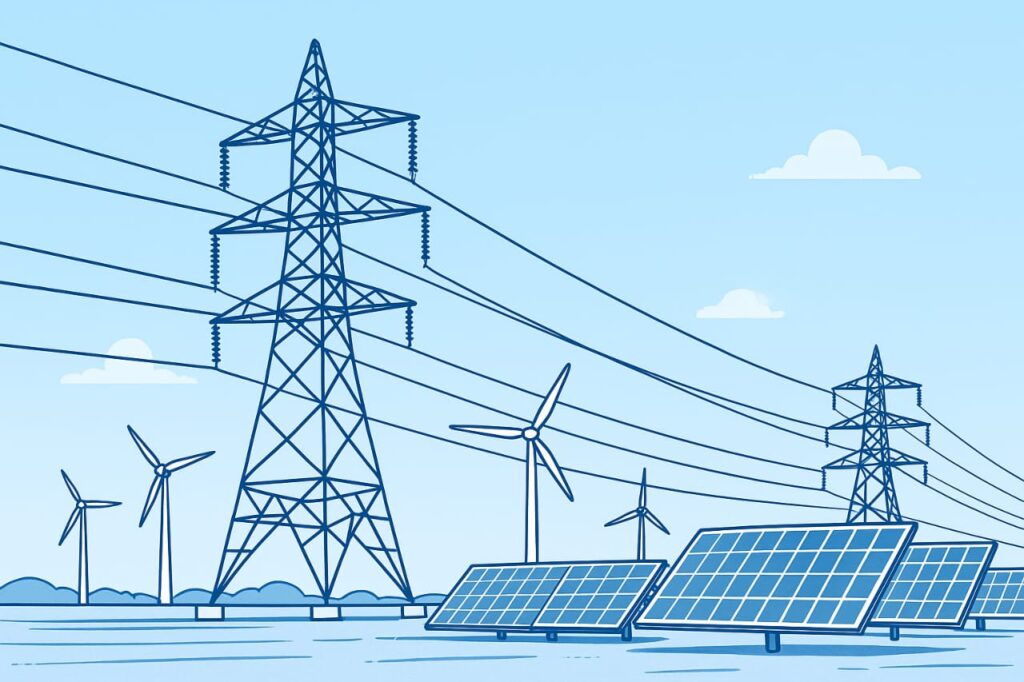
The global energy landscape is rapidly shifting toward renewable sources such as solar, wind, and hydro. While this transition reduces carbon emissions, it introduces significant challenges for transmission line design. Engineers must now account for variable loads, voltage fluctuations, and new grid stability requirements. Proper planning ensures safe and efficient transmission networks for a renewable energy future.
1️⃣ Overview of Renewable Energy Sources & Grid Requirements
Types of Renewable Energy Affecting Grids
- Solar PV systems
- Onshore and offshore wind farms
- Hydroelectric power plants
Intermittent Power Supply Challenges
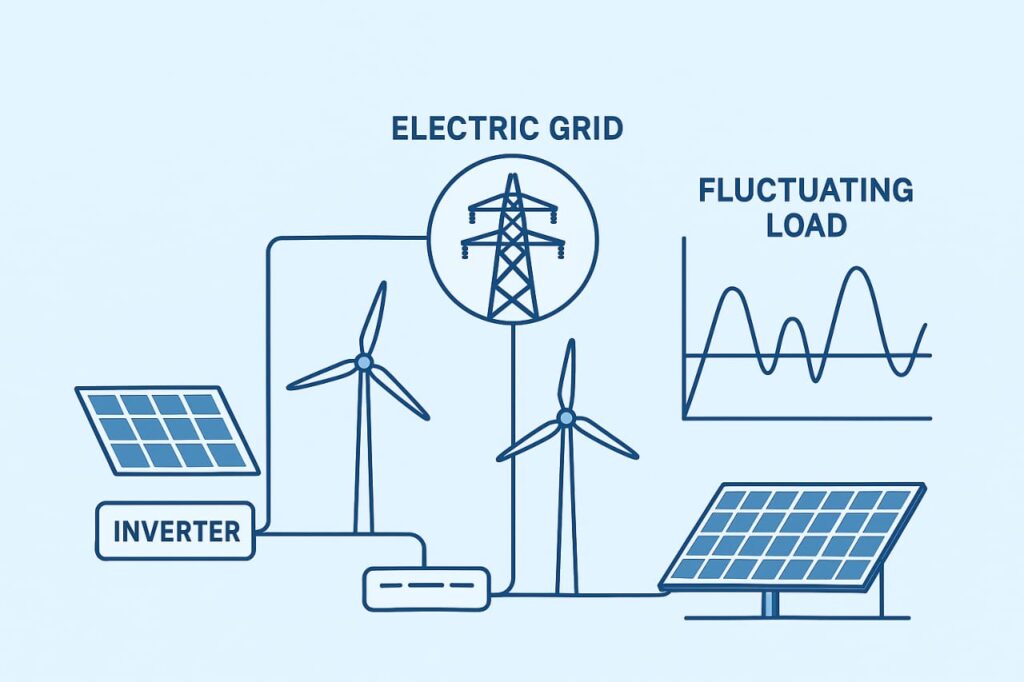
Renewable sources are intermittent, causing voltage and current fluctuations. Transmission lines must accommodate these fluctuations without compromising safety or reliability.
Load Variations and Grid Stability
Traditional grids were designed for predictable loads. Modern renewable integration requires dynamic adjustment of transmission parameters to maintain grid stability.
2️⃣ Challenges in Transmission Line Design Due to Renewable Energy
Voltage Fluctuations
High variability in renewable generation leads to voltage instability, especially during peak production.
Current Surges During Peak Production
Transmission lines must carry sudden high currents, requiring reinforced conductors and advanced protection systems.
Conductor Material & Capacity Considerations
High-capacity, low-resistance conductors such as ACSR or HTLS may be needed to handle renewable loads efficiently.
Tower Placement & Grounding
Transmission towers must account for terrain, lightning protection, and variable loads. Areas with high wind or snow loads require special tower design considerations.
Suggested Image:
- Description: Close-up of a high-voltage transmission tower with reinforced conductors.
- Prompt:
3️⃣ Solutions & Design Strategies
High-Capacity Conductors & Modern Insulators
Advanced conductor materials and long-life insulators ensure safety and efficiency under fluctuating loads.
Smart Grid Technologies & Sensors
Real-time monitoring of current, voltage, and temperature improves system reliability and prevents failures.
Sag-Tension Adjustments for Variable Loads
Engineers must recalculate sag and tension for lines experiencing intermittent loads from renewable sources.
Case Examples in US/UK/Europe
- Offshore wind integration in the UK required reinforced HVDC lines and specialized tower designs.
4️⃣ International Standards & Guidelines
- IEEE, IEC, and NESC provide standards for transmission line safety, conductor sizing, and tower design.
- Regional Differences:
- US: NESC & IEEE standards
- UK/Europe: IEC guidelines and regional renewable integration codes
5️⃣ Future Trends
Energy Storage Integration
Batteries and pumped hydro stabilize grid fluctuations from renewable energy.
High Voltage DC (HVDC) Transmission
Long-distance renewable energy is increasingly transmitted via HVDC lines, reducing energy losses.
Grid Modernization & Automation
Automation allows dynamic load management, improved efficiency, and faster fault detection.
Conclusion
Integrating renewable energy into the power grid significantly impacts transmission line design. Engineers must address voltage fluctuations, intermittent loads, and advanced material requirements while following global standards. By adopting modern conductors, smart grids, and proper sag-tension calculations, transmission networks can remain safe, reliable, and efficient for the renewable energy era.
Pingback: HVDC Transmission and the Future of Renewable Energy - ohtldesign.com