Introduction
Deep foundations, particularly pile foundations, play a critical role in the structural integrity and long-term performance of Overhead Transmission Line (OHTL) towers. In projects executed under the Saudi Electricity Company (SEC), deep foundations are widely adopted due to challenging geotechnical conditions such as weak surface soils, high groundwater levels, and severe uplift forces acting on transmission structures.
This article provides a comprehensive, technical guide on the design, analysis, construction, and quality control of deep foundations for OHTL towers in accordance with SEC standards, while also aligning with international best practices defined by IEEE, IEC, and Eurocode 7.
Why Deep Foundations Are Required for OHTL Towers
OHTL towers are subjected to complex load combinations including vertical, horizontal, uplift, and dynamic loads. In many regions of Saudi Arabia, shallow foundations are not feasible due to poor near-surface soil conditions or excessive tension forces.
Deep foundations are required when:
- Surface soils have insufficient bearing capacity
- Groundwater table is high or fluctuating
- Towers experience large uplift forces, especially:
- Angle towers
- Dead-end towers
- Terminal towers
- Settlement and lateral displacement limits are strict as per SEC criteria
SEC standards explicitly mandate the use of deep foundations under such conditions to ensure safety, durability, and reliability of transmission infrastructure.
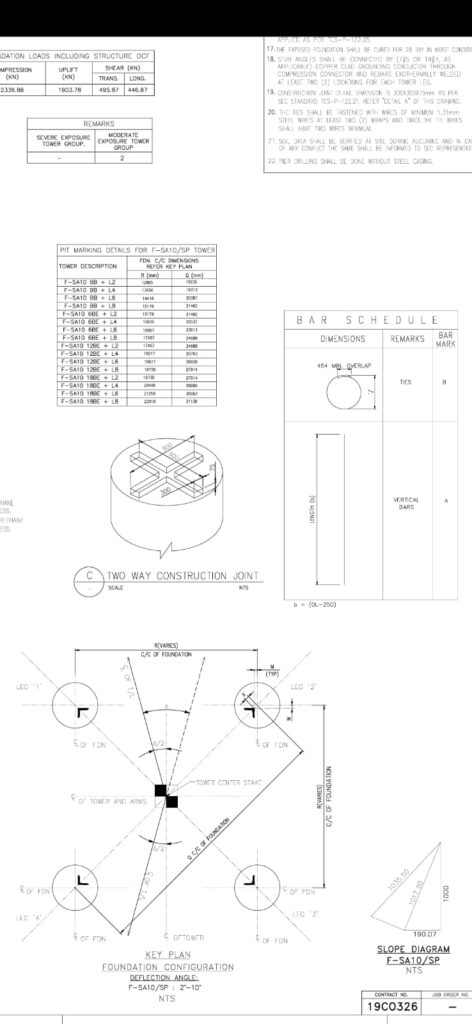
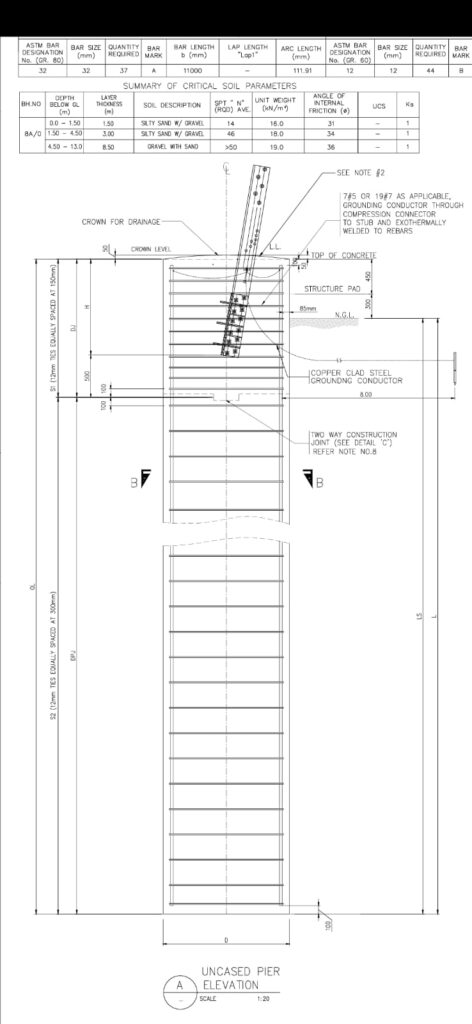
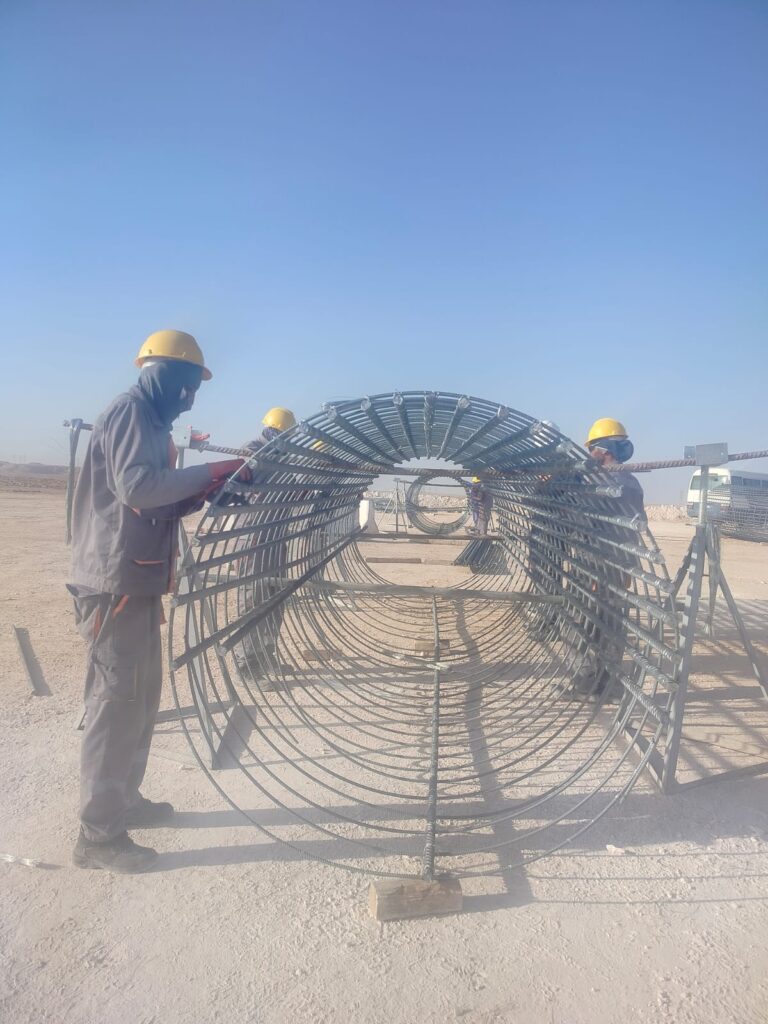
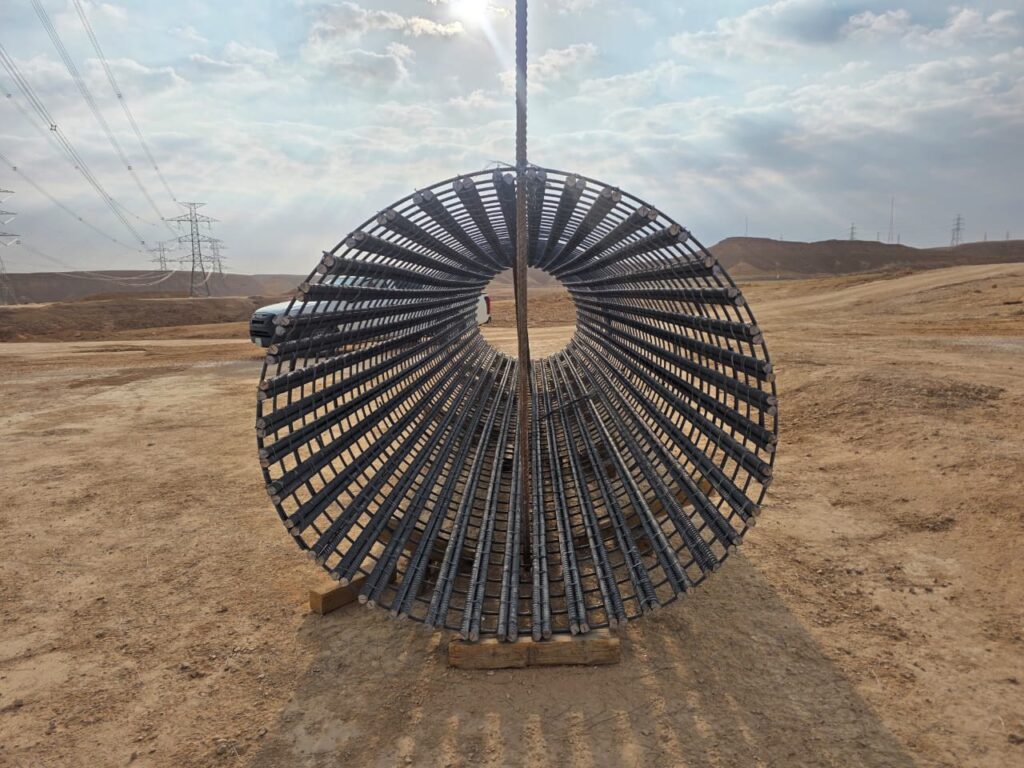
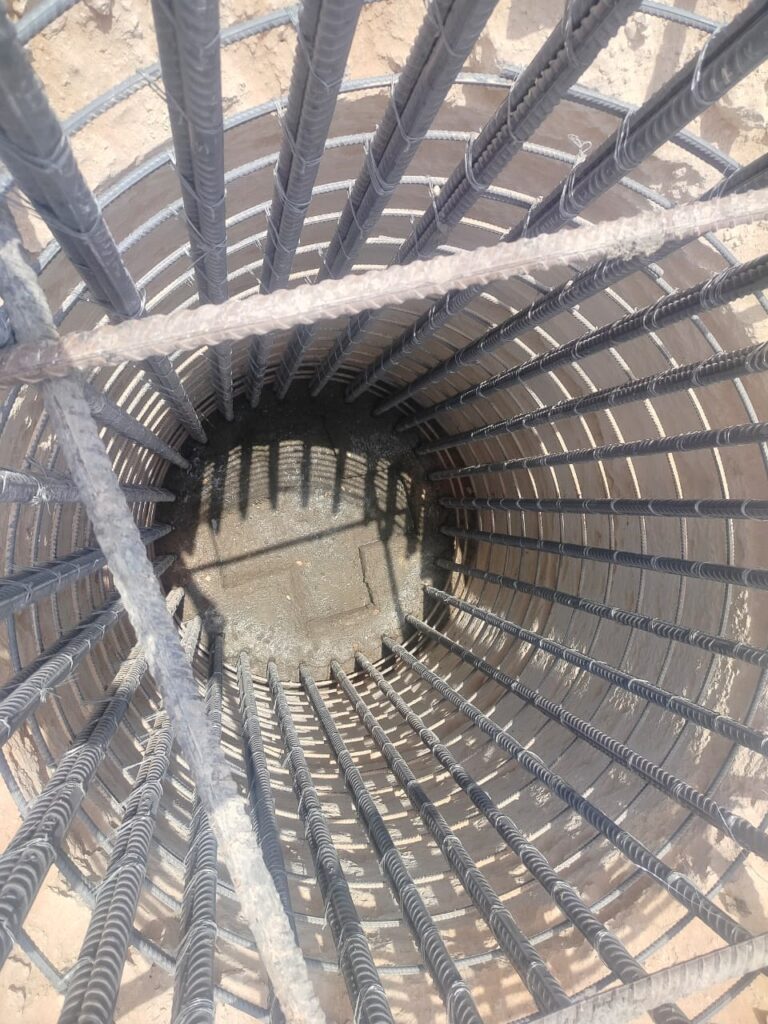
Types of Pile Foundations Used in SEC OHTL Projects
SEC-approved pile systems are selected based on soil conditions, loading demands, constructability, and site constraints.
Common pile types include:
- Bored cast-in-place reinforced concrete piles (most widely used)
- Precast concrete piles (limited applications)
- Mechanical or helical piles (special or constrained sites)
Among these, bored piles dominate SEC OHTL projects due to their adaptability to large diameters, high uplift resistance, and suitability for varied soil profiles.
SEC Design Philosophy for OHTL Deep Foundations
SEC adopts a limit state design approach, consistent with:
- IEEE Std 691 – Transmission Structure Foundation Design
- IEC 60826 – Design Criteria of Overhead Transmission Lines
Key design objectives:
- Ultimate limit state (ULS) safety
- Serviceability limit state (SLS) performance
- Long-term settlement control
- Structural integrity under extreme load cases
Design verification includes:
- Axial compression capacity
- Uplift (tension) resistance
- Lateral load resistance
- Pile group efficiency
- Pile cap structural adequacy
Loads Considered in SEC OHTL Pile Design
Deep foundations for transmission towers must resist multiple simultaneous load effects.
Governing loads include:
- Vertical loads from tower self-weight and conductors
- Horizontal loads from wind and conductor tension
- Uplift loads due to unbalanced forces
- Dynamic and seismic loads, where applicable
Broken Wire Condition – A Governing Design Case
The broken wire condition is one of the most critical and governing load cases in OHTL foundation design.
What happens during a broken wire scenario?
- Sudden failure of one or more conductors in a span
- Loss of tensile force on one side of the tower
- Full tension transferred to the opposite side
Resulting effects:
- Extremely high horizontal loads
- Severe uplift forces on specific tower legs
- Increased bending moments and shear forces in piles and pile caps
SEC, IEEE, and IEC standards all mandate explicit consideration of broken wire loads, particularly for:
- Angle towers
- Tension towers
- Terminal towers
Suspension towers are generally less affected.
Geotechnical Design of Pile Foundations
Axial Bearing Capacity
Axial capacity is calculated from:
- Shaft resistance
- End bearing resistance
SEC applies conservative safety factors to account for soil variability and construction tolerances.
Uplift Resistance
Uplift capacity is derived mainly from:
- Shaft friction
- Self-weight of piles and pile caps
End bearing is conservatively neglected in uplift calculations as per SEC standards.
High safety factors are required due to the dominance of tension forces in OHTL towers.
Lateral Load Resistance
Lateral performance is analyzed using:
- p–y curve methods
- Soil-specific stiffness models
Pile head deflections must remain within SEC-specified allowable limits to ensure tower alignment and conductor clearance.
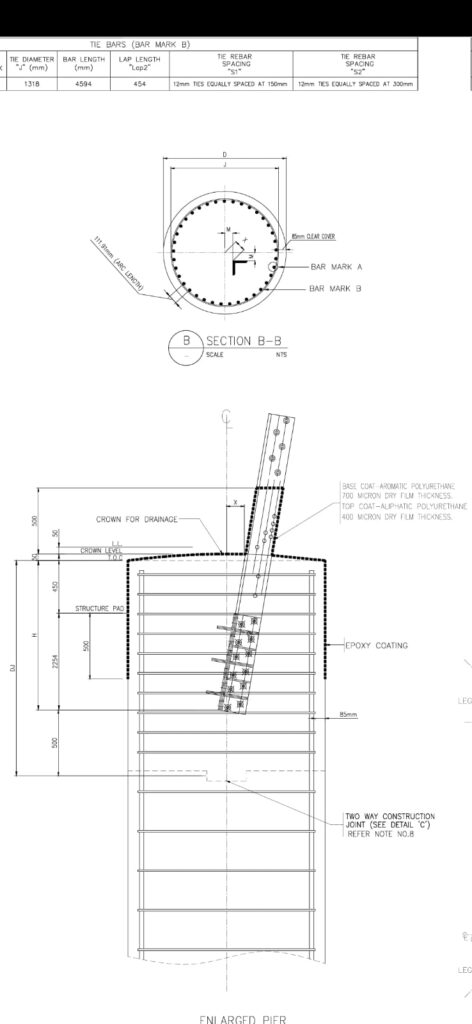
Pile Cap Design Requirements
Pile caps serve as the structural interface between tower legs and piles.
SEC pile cap design requirements include:
- Uniform load distribution among piles
- Resistance to bending and punching shear
- Adequate anchorage of tower legs
- Structural integrity under uplift and lateral loads
Construction Requirements as per SEC Specifications
SEC enforces strict construction controls to ensure foundation performance.
Key construction requirements:
- Borehole stability using casing or drilling fluids
- Verification of pile diameter and depth
- Compliance with concrete strength and durability
- Proper reinforcement placement
- Execution of pile integrity testing
- Full documentation in quality records
Quality Control and Inspection
Quality assurance is a critical component of SEC OHTL projects.
Mandatory quality control measures:
- Review of geotechnical investigation reports
- Inspection before concreting
- Concrete strength testing at 7 and 28 days
- Static pile load testing in critical locations
- As-built documentation and approvals
Selection of Pile Diameter and Depth Based on Soil Type
Typical Pile Diameters in SEC Projects
- 600–800 mm
- Suspension towers
- Moderate loads
- Favorable soil conditions
- 900–1200 mm
- Angle and terminal towers
- High uplift and lateral loads
Typical Pile Depths
- Generally range from 15 m to 35 m
- Can exceed this in:
- Deep alluvial deposits
- Weak soil strata
- High uplift demand zones
Piles in Sandy Soils
- Capacity governed mainly by shaft friction
- Larger diameters improve uplift resistance
- Longer piles needed to reach dense sand
- Scour effects considered in wadis
- CPT data commonly used for design
Piles in Cohesive Soils
- Capacity governed by undrained shear strength
- Smaller diameters may be sufficient
- Long-term settlement and creep must be evaluated
- Potential reduction in shaft resistance over time considered
SEC-Specific Requirements for Pile Design
SEC specifications require:
- Verification of compression and uplift capacity
- Lateral displacement analysis using soil-appropriate p–y curves
- Higher safety factors for angle and terminal towers
- Static pile load tests to validate assumptions
Conclusion
Deep foundations are an essential component of OHTL tower design under Saudi Electricity Company standards, especially in geotechnically challenging environments. Through rigorous design methodologies, conservative safety factors, strict construction control, and comprehensive quality assurance, SEC ensures the long-term safety, serviceability, and reliability of Saudi Arabia’s transmission network.
Adherence to SEC standards, combined with international codes such as IEEE 691, IEC 60826, and Eurocode 7, represents best practice in modern transmission line foundation engineering.
References
- Saudi Electricity Company (SEC). Transmission Line Design Criteria & Specifications
- IEEE Std 691. Guide for Transmission Structure Foundation Design
- IEC 60826. Design Criteria of Overhead Transmission Lines
- EN 1997-1. Eurocode 7: Geotechnical Design
- Tomlinson, M. & Woodward, J. Pile Design and Construction Practice, CRC Press
ALSO READ: Pad & Chimney Foundation

Eng. Mohamed Essam
Senior Civil Construction Engineer | Infrastructure & OHTL SpecialistNationality: Egyptian
LinkedIn Profile
Eng. Mohamed Essam is a Civil Engineer with over 10 years of experience in the execution and management of infrastructure projects, including substation works and high-voltage transmission lines (OHTL). He is currently leading the execution of a 380 kV Transmission Tower project within the Qiddiya Project in Riyadh, one of the Kingdom’s most prominent national initiatives.
Known for precision in field execution, strong coordination with technical teams, and a solid commitment to the highest standards of quality and safety.